FERC Drops a National Data Center Grid Rule for Six Regional Fights, With Grid Operator Filings Due November 16
In October 2025 Energy Secretary Chris Wright used a rarely invoked power under the DOE Organization Act to direct the Federal Energy Regulatory Commission to consider a national rule for connecting large electricity users, mainly data centers, to the transmission grid. He asked for a final rule by April 30, 2026.
FERC didn’t write one. On June 18 it instead ordered the six grid operators it regulates, PJM, MISO, SPP, CAISO, ISO New England and NYISO, to show why their rules for large loads are just and reasonable, or change them. It left the national rulemaking docket open. In August it gave the operators 90 more days, and ISO New England plans its tariff filing on November 16.
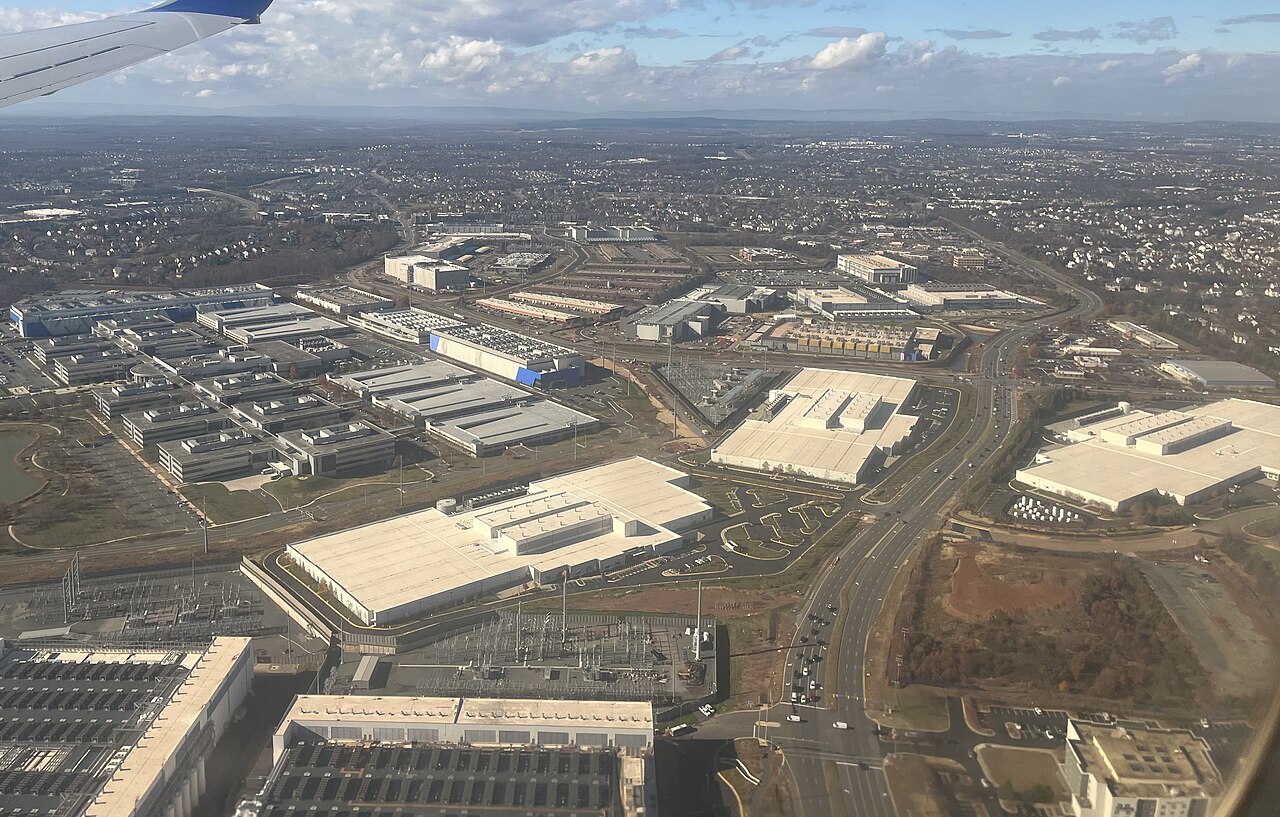
Photo: Theodore Christopher, CC0 via Wikimedia Commons
Why FERC changed course
States pushed back hard. The association of state utility regulators said asserting federal jurisdiction over connecting customers to the grid was outside FERC’s authority under the Federal Power Act. Retail electricity, including who connects and on what terms, has long been a state matter. FERC’s June orders claim authority only over transmission service and over shifting costs between customers, and say they’re “not intended to intrude on state authority.”
The orders cover five areas: how studies are run, protection for other customers against cost shifts, co-location of data centers with power plants, service for loads that can be curtailed, and joint study of new generation and load. The default definition of a large load is 50 megawatts or more at one site. Texas, whose grid isn’t under FERC, and regions without a grid operator, much of the Southeast and West, aren’t covered.
What the regions are doing
- PJM, the largest grid operator, filed in August for an interim service under which new large loads that don’t bring their own capacity can be curtailed, plus a registry of large loads. It asked for an effective date by October 12, ahead of its December capacity auction.
- On September 29 FERC accepted PJM’s backstop procurement for reliability, but suspended it until February 2027.
- MISO filed on October 2 for a 120-day study process for loads over 200 megawatts paired with new generation, asking for a ruling by December 2.
- SPP had a curtailable large-load service approved in June.
Earlier, in December 2025, FERC found PJM’s rules on co-located load unjust and ordered new transmission options.
The stakes
Data center demand is a main reason US electricity use is growing again after two decades of little change. Grid operators and utilities worry about reliability and about households paying for upgrades built for data centers. A bipartisan Senate permitting bill introduced on September 30 would make data centers pay all associated transmission costs.
For DOE, the outcome matters for its plans to host data centers on federal land and for its emergency orders keeping coal plants open. A national rule would have set one standard. Six regional rules, decided one filing at a time through the winter, mean different terms for data centers depending on where they’re built.