The Pentagon's $1.5 Trillion Request Meets a Stalled NDAA and a Stopgap That Funds Defense at $838 Billion
The fiscal 2027 budget asked Congress for $1.5 trillion for national defense, a 42% jump. The Pentagon is starting the year on $838.5 billion, under a continuing resolution that runs to December 11 and bars new programs. The annual defense authorization bill, which Congress has passed every year for more than six decades, is stuck in the Senate.
The gap between what was asked and what exists is the widest in years.
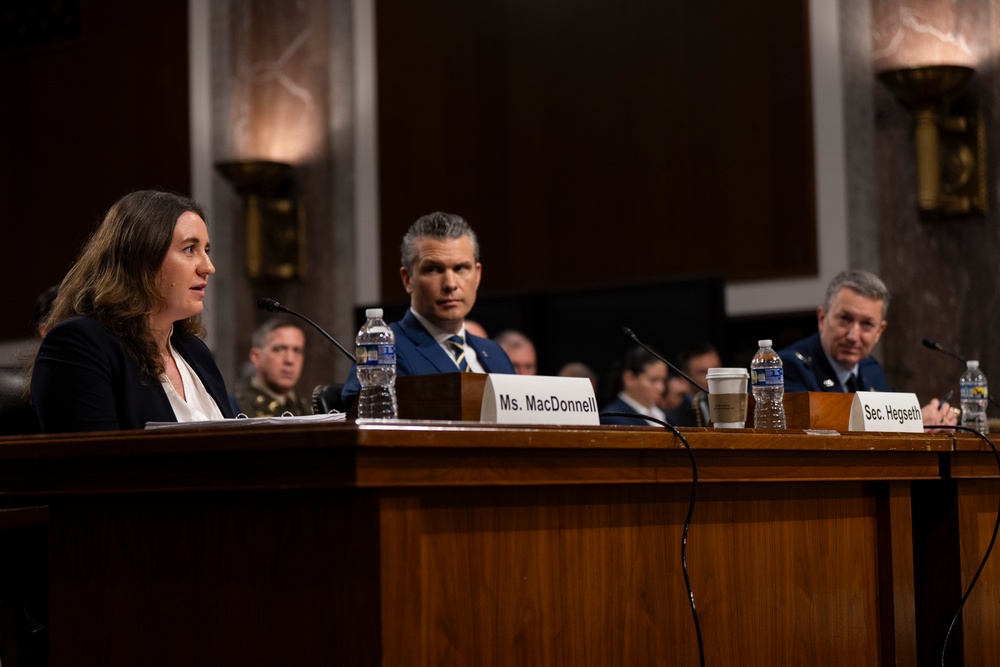
Photo: U.S. Navy
How the request was built
The White House released its budget on April 3, 2026. It asked for $1.15 trillion for defense through regular appropriations and another $350 billion through a budget reconciliation bill, which can pass the Senate with a simple majority. Nondefense spending would fall 10% to $660 billion.
The Pentagon’s detail followed on April 21. It sought more than $65 billion for shipbuilding, 18 warships and 16 support ships, the largest request since 1962. It asked $64.5 billion for munitions and $53.6 billion for autonomous drones and contested logistics. The Air Force budget would rise 33.6%, the Navy’s 24.3% and the Army’s 23.9%. The request was drafted before the conflict with Iran began in late February.
On the other side of the ledger, the budget proposed cutting NSF by 54%, NASA by 23% with NASA science down 46%, NIH by 12% and DOE’s Office of Science by 13.5%, and eliminating the national endowments for the arts and humanities.
The reconciliation half hasn’t moved
The $350 billion meant to travel through reconciliation is the weak point. Neither chamber has made meaningful progress on it. The House adopted a framework for a smaller package with about $60 billion for defense, tied to the cost of operations against Iran. The Defense Secretary has floated about $200 billion in supplemental war funding.
Golden Dome, the planned missile defense shield, shows what’s at stake: almost all of its fiscal 2027 request depends on that second reconciliation bill.
The NDAA
The House passed its version of the National Defense Authorization Act on July 22 by 216 votes to 212, after a first attempt to set the rules for debate failed. It authorizes $1.15 trillion, funds a second destroyer, reauthorizes the Defense Production Act through 2031 and carries several social policy provisions. The text that went to the Senate also included the SAVE Act on voter eligibility.
The Senate Armed Services Committee approved its own bill, at $1.14 trillion, by 18 to 9 in June. On July 14 a vote to begin debate failed, 50 to 46. Democrats cited the Iran conflict and the size of the defense increase. There has been no floor action since, only informal talks.
What it means in practice
A Pentagon on a stopgap can’t start new programs or raise production rates on existing ones without special authority. The Golden Dome program manager told senators in late September that more than 150 new defense starts are frozen. Shipbuilding, munitions and drone plans in the request all wait on appropriations that the Senate hasn’t begun.
Other democracies raising defense budgets fast, from Poland to Germany, have done it through budget laws that pass on time or through special funds set up for the purpose. Washington is trying to fund the biggest increase in decades through a process that hasn’t delivered on-time full-year defense appropriations in years. The real defense budget for 2027 will be decided in the lame duck, or later.