Government Shutdowns Turn Aviation Workers Into Washington's Financial Shock Absorbers
Washington has developed a peculiar approach to essential public services: declare the work too important to stop, then interrupt the pay of the people doing it. In aviation, that contradiction reaches well beyond federal offices. It follows passengers through security checkpoints, into departure lounges and onto aircraft waiting for clearance. A government shutdown may begin as a dispute over appropriations, but its consequences travel.
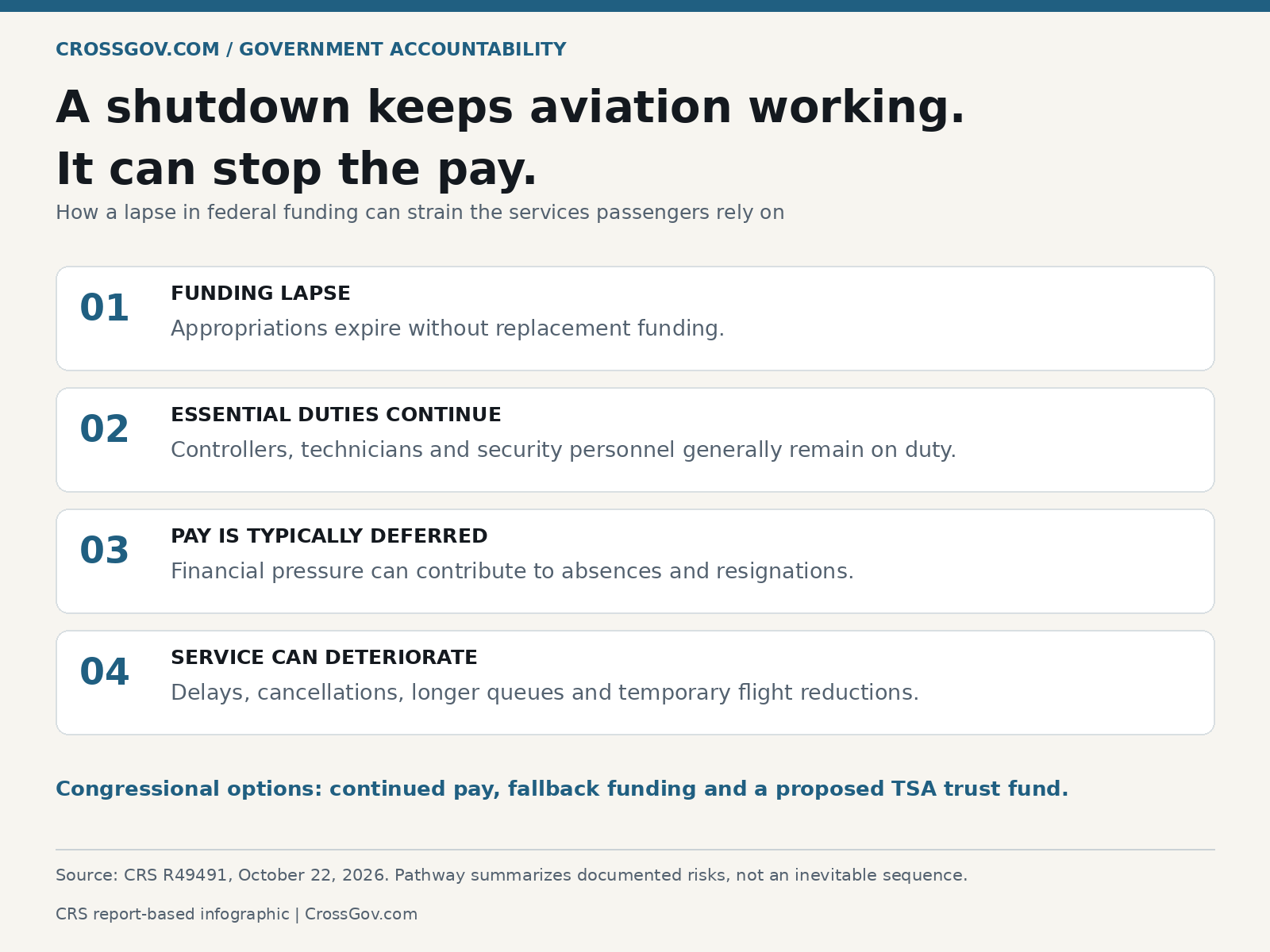
Photo credit: PXEF.com.
A Congressional Research Service report published October 22 examines how funding lapses affect civil aviation. Air traffic controllers, systems technicians and airport security personnel generally continue working during shutdowns because their duties protect lives and property. Their pay, however, is typically deferred until funding resumes. CRS connects the resulting financial pressure with increased employee absences and resignations, and documents consequences including flight delays, cancellations, longer security queues and temporary reductions in flights. Keeping an operation legally open does not guarantee that it can function normally.
The governance problem is straightforward. A contingency plan can identify the workers required to report for duty, but it cannot make their household bills disappear. Expecting employees to finance the continuity of government through delayed wages transfers the immediate burden of political failure to people with very little control over the dispute. Eventually, passengers and businesses absorb part of that burden too. The airport becomes the place where an abstract argument about spending turns into a missed connection.
Congress has options. CRS describes proposals to continue paying essential aviation personnel during funding gaps, alongside measures that would provide fallback funding for core operations. The proposed Pay TSA Act of 2026 would establish a trust fund supported by passenger security fees, with shutdown spending priorities including frontline compensation and checkpoint staffing. These are legislative proposals, rather than protections already guaranteed to workers.
Protecting selected services raises a legitimate question about Congress’s control over spending. Yet that argument should be made openly, with the operational costs acknowledged. A funding mechanism can preserve legislative scrutiny while reducing the damage caused when negotiations fail. Congress should demand clear accounting, defined spending limits and public reporting from any protected fund. Those requirements would make continuity funding reviewable rather than automatic in the careless sense of the word.
The standard should be practical: can the government sustain the service it insists must continue? If the answer depends on employees enduring another missed paycheck, the contingency arrangement is incomplete. Aviation workers should not have to serve as Washington’s emergency credit line.