TPS Terminations Put Immigration Decision Making and Public Notice Under Scrutiny
An immigration decision is not fully administered when an official signs it. People must be able to understand when it takes effect, employers must know what documentation remains valid, and agencies must explain how litigation changes implementation. Temporary Protected Status brings these obligations into unusually sharp focus because permission to remain and work can depend on a country designation, a government notice and the timing of a court decision.
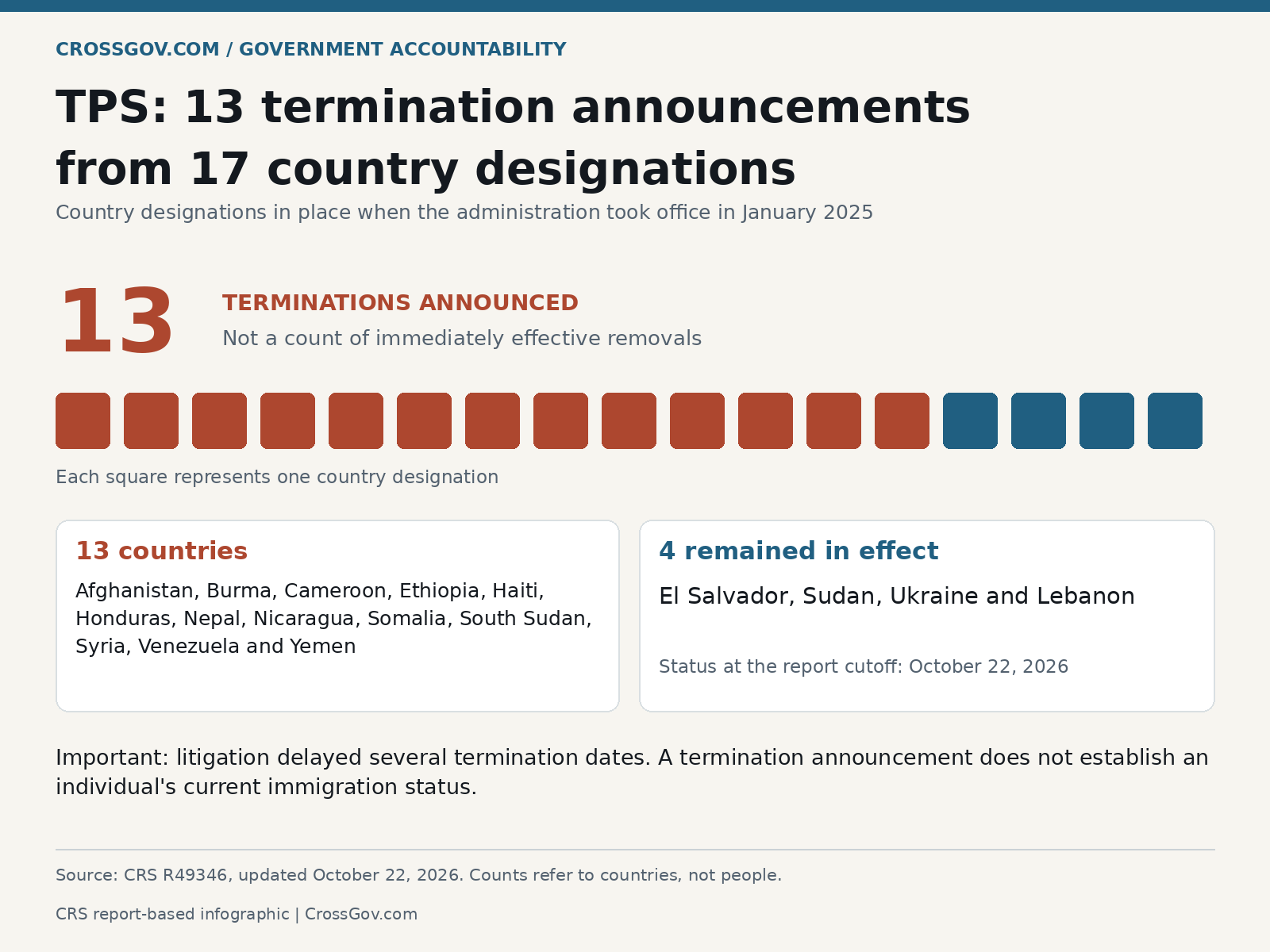
Photo credit: PXEF.com.
An October 22 Congressional Research Service fact sheet records the scale of the Trump administration’s changes. Seventeen countries had TPS designations when President Trump took office in January 2025. The administration subsequently announced terminations for 13. TPS provides temporary protection for eligible nationals of countries affected by armed conflict, natural disasters or other extraordinary conditions preventing safe return. The DHS secretary can extend a designation when qualifying conditions continue and must terminate it upon determining that those conditions no longer apply.
Those decisions deserve scrutiny on their reasoning as well as their execution. Congress should ask how country conditions were evaluated, what evidence supported each determination and whether implementation instructions reached the people expected to follow them. A policy can be restrictive and still be administered clearly. Equally, a government can defend its legal authority while failing to provide a usable explanation of what its decisions require.
The report identifies an especially revealing notice problem. El Salvador, Sudan and Ukraine retained their designations at the report’s cutoff despite previously scheduled expiration dates having passed without published Federal Register determinations to extend or terminate them. USCIS provided an assurance for Salvadoran beneficiaries, while DHS supplied matching assurances concerning Sudan and Ukraine to CRS by email. Lebanon’s designation also remained in effect. Separately, CRS cautions that litigation delayed several termination dates and that its beneficiary figures include some people who obtained permanent residence. Those figures therefore should not be read as a count of people immediately facing removal.
An email to congressional researchers may clarify the government’s position, but it also raises a fair administrative question: how easily could an affected worker or employer find the same answer? Public notice should be consistent, accessible and specific enough to support ordinary decisions. People should not need to reconstruct policy from scattered announcements.
For congressional oversight, the useful questions concern evidence, notice and implementation. Were decisions explained adequately? Were changing effective dates communicated promptly? Could employers verify continuing work authorization without guessing? Immigration policy will remain politically contested. Whether the government communicates its own rules competently ought to be a much easier matter.